


Best Dry Fruits for Kids: Nutritious Snacks to Support Your Child's Growth and Brain Development

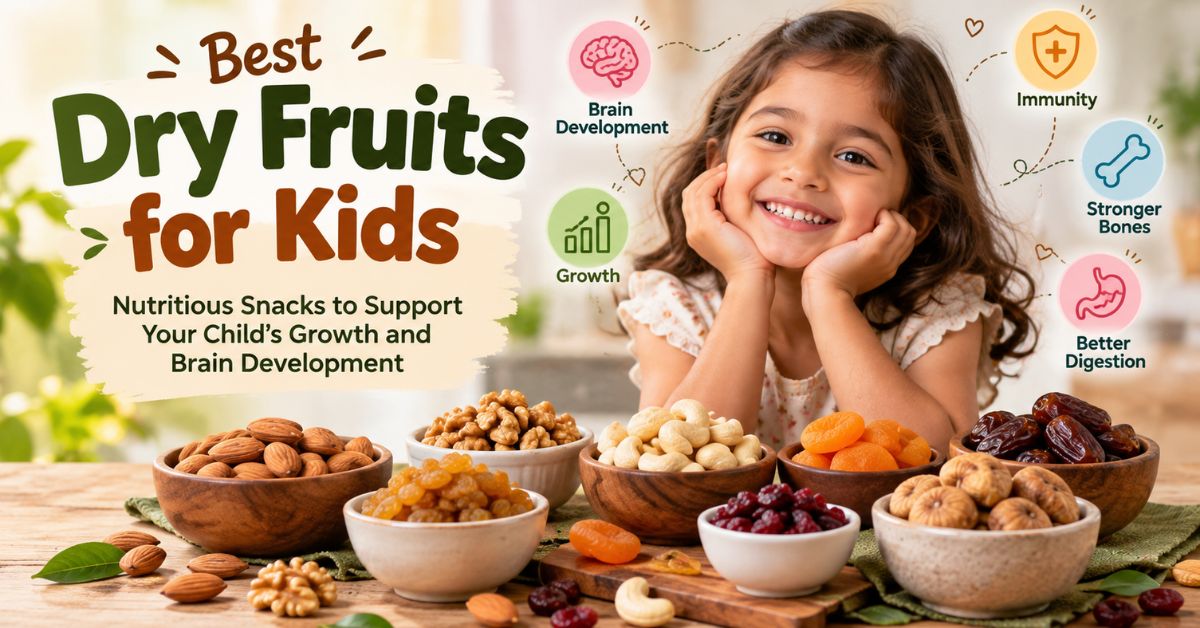
Every parent is familiar with the tantrums children throw when it comes to mealtimes. Hence, it can become quite challenging to ensure the right nutrient intake for your child. In that case, dry fruits for kids can be a lifesaver!
They’re a concentrated source of essential nutrients that support growth, brain development, immunity, and overall health. Another advantage of dry fruits is their convenience. They are easy to carry in lunchboxes, require no peeling or preparation, and have a longer shelf life than many fresh foods.
So, discover which dry fruits for kids can bridge nutritional gaps in their daily diet with the help of this blog!
Why Are Dry Fruits Good for Kids?
Children have high nutritional needs because their bodies and brains are developing rapidly. The best dry fruits for children provide concentrated nutrition in small servings. Hence, they’re especially useful for picky eaters who may not consume enough nutrient-dense foods.
Many dry fruit benefits for children come from nutrients such as healthy fats, iron, calcium, magnesium, potassium, and antioxidants. These nutrients contribute to bone development, cognitive function, energy production, immune support, and digestive health.
These healthy snacks for kids in India are also highly versatile and convenient. They can be added to porridge, smoothies, yoghurt, homemade energy bites, or eaten as a snack.
10 Best Dry Fruits for Kids and Their Health Benefits
Dry fruits for child growth are essential. Find out the following dry fruit benefits for children so you can choose to add the right ones to their diet:
1. Almonds: Benefits for Kids' Brain Development and Growth
Among the most popular dry fruits for kids' brain development, almonds contain vitamin E, healthy fats, protein, magnesium, and antioxidants. These nutrients support brain function, nerve health, and overall growth.
The regular consumption of almonds for kids may also help children stay fuller for longer and support healthy energy levels.
2. Walnuts: A Brain-Boosting Dry Fruit for Kids
Walnuts are well known for their omega-3 fatty acid content. These healthy fats play an important role in brain development and cognitive function.
Hence, walnuts for children's brain health are highly recommended because research consistently highlights omega-3 fats as important nutrients during childhood.
3. Cashews: Nutrients for Immunity, Bones, and Energy
Cashews contain protein, zinc, magnesium, iron, and healthy fats. These nutrients contribute to immunity, bone health, and energy production. Thus, cashews for children can be a nutritious addition to their lunchboxes and after-school snacks if served in moderation.
4. Raisins: A Sweet Source of Fibre and Iron for Kids
Raisins provide natural sugars, fibre, potassium, and iron. They can support healthy digestion and contribute to iron intake, which is important for growing children. Raisins for children also offer a naturally sweet and healthier alternative to processed sugary snacks.
5. Dates: Natural Energy and Essential Nutrients for Kids
Dates contain natural carbohydrates, potassium, magnesium, and small amounts of iron. They provide quick energy and can be useful for active children. Their natural sweetness also makes them a popular ingredient in homemade snacks.
6. Dried Figs: Fibre and Calcium for Kids' Digestion and Bone Health
Dried figs are rich in fibre and contain calcium, potassium, and antioxidants. Hence, they maintain your child’s digestive regularity and provide nutrients that support their bone development.
7. Pistachios: Protein, Healthy Fats, and Fibre for Growing Kids
Pistachios provide protein, healthy fats, fibre, and antioxidants. These nuts for kids in India can satisfy their hunger while contributing essential nutrients needed for growth and development.
8. Dried Apricots: Vitamin A and Fibre for Immunity and Digestion
Dried apricots contain vitamin A, fibre, and potassium. Vitamin A supports vision and immune function, while fibre contributes to digestive health. Hence, it’s one of the highly recommended dry fruits for kids' immunity.
9. Prunes: A Fibre-Rich Dry Fruit for Children's Digestive Health
Prunes are particularly known for supporting digestive health. Their fibre content may help maintain regular bowel movements. Hence, they’re especially useful for children who occasionally experience constipation.
10. Dried Berries: Antioxidant-Rich Snacks for Kids
Dried berries contain antioxidants that help protect cells from oxidative stress. If they’re consumed without excessive added sugar, they can be one of the healthiest snacks for kids in India.
Also Read: Top 10 Fruits For Children With Pictures
Best Dry Fruits for Kids by Age: Toddler to Teenager
Still confused about the dry fruits for children? Here’s an age-appropriate guide based on dry fruit benefits for children:
1. Dry Fruits for Toddlers (1–3 Years)
Toddlers require softer foods that are easy to chew and digest. Whole nuts may pose a choking risk; hence, it is important to offer age-appropriate options. Dry fruits for toddlers can include raisins, dates, almonds, etc.
Soaked raisins provide natural sweetness along with iron and fibre. Date paste can be mixed into porridges or homemade snacks as a healthier alternative to refined sugar.
Soaked and peeled almonds, finely ground or mashed, are often easier for toddlers to consume while still providing healthy fats and vitamin E.
2. Dry Fruits for Preschoolers (3–6 Years)
As chewing abilities improve, preschoolers can gradually enjoy a wider range of dry fruits and nuts for kids in India. Hence, dry fruits for kids' brain development can include dried figs, walnuts, etc.
Soft dried figs can support digestive health because of their fibre content. Crushed walnuts mixed into oatmeal, yoghurt, or smoothies can provide omega-3 fatty acids that support brain development.
Small quantities of finely chopped dry fruits can also be added to homemade snacks and meals.
3. Dry Fruits for School-Age Kids (6–12 Years)
School-going children often need enough energy for learning, sports, and daily activities. Hence, nuts for kids in India like whole almonds, cashews, pistachios, raisins, dried apricots, and walnuts, can be included as part of balanced snacks.
This healthy snacking for school kids in India provides protein, healthy fats, minerals, and antioxidants that support both physical growth and concentration during school hours.
4. Dry Fruits for Teenagers: Nutrients for Energy, Brain Health, and Growth
Teenagers have increased nutritional requirements due to growth spurts and hormonal changes. Hence, dry fruits for child growth are a must!
Walnuts may support cognitive performance because of their omega-3 content. Almonds provide healthy fats and protein that help maintain energy levels. Dates contribute iron and natural carbohydrates, while figs offer calcium and fibre that support bone health and digestion.
Also Read: Top Health Benefits of Dried Fruits: Why You Should Include Them in Your Diet
How Many Dry Fruits Should Kids Eat Per Day?
Parents often wonder about how many dry fruits for kids per day are appropriate. The right quantity depends on your child’s age, activity level, and overall dietary intake.
If you have toddlers, a small serving of soft dry fruits such as soaked raisins, dates, or soaked almonds is usually enough. Preschool and school-age children can, on the other hand, enjoy a small handful of mixed dry fruits and nuts daily as part of a balanced diet. Teenagers may consume slightly larger portions depending on their nutritional needs and activity levels.
Since dry fruits are calorie-dense, it’s important to consume them in moderation. They should complement a balanced diet that includes fresh fruits, vegetables, whole grains, dairy or dairy alternatives, and protein-rich foods.
Also Read: Top High Protein Dry Fruits for Muscle Building: Complete List and Nutritional Benefits
Healthy Ways to Include Dry Fruits in Your Child's Diet
It’s not that difficult to make nutritious foods enjoyable for kids. Instead, healthy snacking for school kids in India can encourage positive eating habits.
Hence, you can try sprinkling chopped almonds, walnuts, pistachios, and raisins over oatmeal, yoghurt, or breakfast cereals. At the same time, smoothies can be blended with dates, soaked almonds, or figs for added nutrition and natural sweetness.
Homemade laddoos made with dates and dry fruits can also serve as fun and wholesome treats. Parents can add finely chopped dry fruits to pancakes, energy bites, homemade granola, or school lunchbox snacks.
Also Read: Top 10 Types of Dry Fruits You Should Know: Best Varieties and Health Benefits
Dry Fruit Allergy and Safety Tips for Kids
While dry fruits and nuts offer many health benefits, some children may have nut allergies. Hence, parents should introduce new nuts and dried fruits carefully, gradually, and in moderation, especially in younger children.
If there is a family history of allergies or if a child experiences symptoms such as rashes, swelling, breathing difficulties, or digestive discomfort after consuming nuts, it is highly recommended to consult a paediatrician promptly.
Children under the age of five should not be given whole nuts unless they can chew them safely, since whole nuts may present a choking hazard. Age-appropriate preparation, such as soaking, crushing, grinding, or finely chopping, can help reduce this risk.
Also Read: Top Dry Fruits Rich in Vitamin D and Their Amazing Health Benefits
Final Thoughts on Dry Fruits for Kids
Thus, dry fruits for kids in daily meals can be an easy and effective way to support growth, brain development, immunity, digestion, and overall health. Almonds, walnuts, cashews, raisins, dates, figs, and other nutrient-rich dry fruits provide valuable vitamins, minerals, healthy fats, and fibre that growing children need.
However, they should always be offered in age-appropriate portions and combined with a balanced diet. It is highly recommended to consider a child’s individual dietary needs and consult a paediatrician regarding any allergies or specific health concerns.
Shop premium dry fruits for the whole family and discover carefully selected almonds, walnuts, cashews, raisins, dates, figs, and more to support healthy everyday nutrition. Only at Fruitsmith!
Frequently Asked Questions About Dry Fruits for Kids
Q1. Which are the best dry fruits for children?
Ans: Almonds, walnuts, cashews, raisins, dates, figs, pistachios, and dried apricots are among the best dry fruits for children because they provide protein, healthy fats, vitamins, minerals, and fibre that support growth and development.
Q2. Are dry fruits good for kids' brain development?
Ans: Absolutely! Certain dry fruits for kids' brain development, especially walnuts and almonds, contain nutrients such as omega-3 fatty acids, vitamin E, and healthy fats that support cognitive function and brain health.
Q3. Can toddlers eat dry fruits?
Ans: Of course! However, they should be served in age-appropriate forms. Soaked raisins, date paste, and soaked almonds are commonly recommended dry fruits for toddlers because they are softer and easier to consume safely.
Q4. How many dry fruits should a child eat daily?
Ans: The amount varies by age and nutritional needs. Most children can enjoy a small daily serving of mixed dry fruits and nuts as part of a balanced diet, instead of consuming excessive portions.
Q5. Which dry fruits help improve immunity in children?
Ans: Cashews, almonds, walnuts, raisins, and dried berries contain vitamins, minerals, antioxidants, and healthy fats. Hence, they’re the top choices for dry fruits for kids' immunity when included as part of a nutritious diet.
Q6. What are some healthy ways to serve dry fruits to children?
Ans: Dry fruits can be added to oatmeal, smoothies, yoghurt, homemade laddoos, energy bites, pancakes, cereals, and lunchbox snacks. These options encourage healthy snacking for school kids in India while boosting nutritional intake.


